Japanese Gate Icon: A Cultural Design Treasure
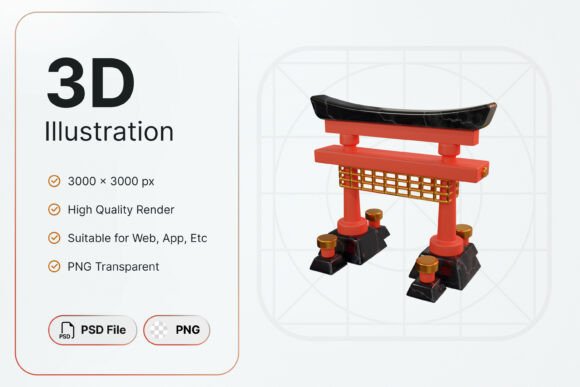
The Japanese Gate Icon, inspired by the iconic torii architecture, is a stunning 3D design that captures the essence of traditional Japanese culture. This detailed icon is crafted with a clean and vibrant aesthetic, making it a versatile asset for a wide range of creative projects. Whether you're working on cultural illustrations, travel materials, or digital assets, this icon offers a unique way to incorporate Japanese heritage into your work.
What sets the Japanese Gate Icon apart is its attention to detail and the balance between traditional elements and modern design. The torii, a sacred Shinto gateway, has been reimagined in a 3D format that retains its symbolic significance while adapting to contemporary visual styles. This makes it an ideal choice for designers looking to infuse authenticity and cultural depth into their work without compromising on aesthetics.
Creative Possibilities with the Japanese Gate Icon
The versatility of the Japanese Gate Icon opens up numerous creative possibilities across different industries. For instance, in the realm of travel and tourism, this icon can be used as a visual symbol to represent destinations, cultural landmarks, or local experiences. Its high-resolution format ensures that it remains sharp and clear, even when scaled for large displays or printed materials.
In gaming environments, the Japanese Gate Icon can serve as a visual motif for levels, quests, or character designs. It adds a layer of cultural richness that enhances the player's experience and immerses them in the game's setting. Similarly, in digital art and graphic design, the icon can be integrated into logos, banners, or web interfaces to create a cohesive and culturally resonant visual identity.
For educators and content creators, the Japanese Gate Icon offers a powerful tool for teaching about Japanese culture and history. It can be used in presentations, educational materials, or interactive media to illustrate concepts such as Shinto beliefs, traditional architecture, or the symbolism of gateways in Japanese society. Its transparent background also allows for seamless integration into various design contexts.
Practical Applications and Use Cases
Designers and marketers can leverage the Japanese Gate Icon to create visually striking campaigns that resonate with audiences interested in Japanese culture. Whether it's for branding, social media content, or advertising, the icon provides a recognizable and meaningful visual element that can enhance the overall message and appeal of a project.
Small business owners and entrepreneurs can use the icon to differentiate their products or services in a competitive market. For example, a boutique offering Japanese-inspired merchandise could use the icon in their branding to signal authenticity and cultural connection. This not only attracts a specific audience but also builds trust and credibility with customers who value traditional craftsmanship and design.
Freelancers and independent creators can benefit from the Japanese Gate Icon by incorporating it into their portfolio or client projects. Its high-resolution format and ready-to-use files make it easy to implement across different platforms and formats. Whether it's for print, web, or digital media, the icon ensures consistency and quality in every application.
Adapting the Japanese Gate Icon for Different Goals
The Japanese Gate Icon is not limited to a single use case; it can be adapted to suit various goals and audiences. For instance, in a more abstract or artistic context, the icon can be modified through color, placement, or integration with other design elements to create a unique visual narrative. However, it's important to note that the assets cannot be altered in color or shape, so any modifications must be done within the provided files.
For users focused on accessibility and inclusivity, the icon can be used as a reference point for creating culturally sensitive and respectful designs. By understanding the historical and symbolic meaning of the torii, creators can ensure that their use of the icon aligns with the values and traditions it represents.
Additionally, the Japanese Gate Icon can be paired with other cultural symbols or motifs to create a more comprehensive visual language. This approach allows for a deeper exploration of Japanese aesthetics and can lead to innovative and meaningful design solutions that reflect both tradition and modernity.
Ensuring Clarity and Effectiveness in Design
To maximize the impact of the Japanese Gate Icon, it's essential to maintain clarity and effectiveness in its application. This means considering the context in which it will be used and ensuring that it complements the overall design rather than overwhelming it. For example, in a busy layout, the icon should be placed strategically to draw attention without causing visual clutter.
Consistency is another key factor in using the Japanese Gate Icon effectively. Whether it's for a brand, a website, or a publication, maintaining a consistent style and placement of the icon helps reinforce its visual identity and strengthens the connection with the audience. This is particularly important in multi-platform projects where the icon may appear in different formats and sizes.
Originality and audience-friendliness are also crucial considerations. While the Japanese Gate Icon is rooted in traditional design, its application should reflect the needs and preferences of the target audience. This might involve adjusting the scale, orientation, or surrounding elements to create a more engaging and relatable visual experience.
Final Thoughts on the Japanese Gate Icon
The Japanese Gate Icon is more than just a design element; it's a bridge between tradition and innovation. Its detailed 3D representation of a torii offers a fresh perspective on a classic symbol, making it a valuable resource for creators across various fields. Whether you're looking to add cultural depth to your work, enhance your brand's visual identity, or explore new creative directions, this icon provides a solid foundation for meaningful and impactful design.