Greek and Latin Roots Word Search Puzzle: A Strategic Tool for Language Mastery
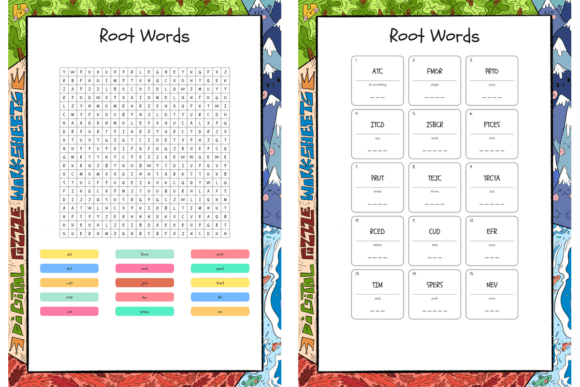
The Greek and Latin Roots Word Search Puzzle is more than a simple educational activity—it's a strategic tool that can enhance language learning, improve vocabulary, and deepen understanding of word origins. Designed for students of all ages, this interactive worksheet combines elements of a word search, scramble, and crossword puzzle to create an engaging and effective way to explore the building blocks of language. By focusing on Greek and Latin roots, it provides a foundation for recognizing patterns in words, which can significantly boost comprehension and communication skills.
Why Greek and Latin Roots Matter in Modern Communication
Understanding Greek and Latin roots is essential for anyone looking to expand their vocabulary and improve their ability to interpret complex texts. Many modern words, especially in academic, scientific, and professional contexts, are derived from these ancient languages. For example, the root "bio-" (life) appears in words like "biology" and "biography," while "geo-" (earth) is found in "geology" and "geography." Recognizing these roots allows learners to break down unfamiliar words and infer their meanings without relying solely on memorization.
This kind of linguistic insight is particularly valuable in fields such as medicine, law, engineering, and technology, where precise terminology is critical. The Greek and Latin Roots Word Search Puzzle helps students build this awareness in a fun and interactive way, making it a practical resource for educators and self-learners alike.
Strategic Use of the Puzzle for Goal-Oriented Learning
When used intentionally, the Greek and Latin Roots Word Search Puzzle can support a wide range of educational and professional goals. For teachers, it serves as an effective supplement to vocabulary instruction, helping students grasp the structure of words and how they relate to one another. For professionals or entrepreneurs, it can be a tool for improving written and verbal communication, especially when dealing with technical or specialized content.
Consider using the puzzle as part of a broader strategy to enhance literacy and critical thinking. For instance, if you're working on a marketing campaign that requires clear and impactful messaging, understanding word roots can help you craft more precise and compelling copy. Similarly, if you're preparing for an exam or writing a research paper, the puzzle can reinforce your ability to recognize and use complex terms effectively.
Planning and Positioning: How to Maximize the Puzzle’s Value
To get the most out of the Greek and Latin Roots Word Search Puzzle, it's important to approach it with a clear plan. Start by identifying the specific goals you want to achieve—whether it's improving vocabulary, supporting a language curriculum, or enhancing communication skills. Once you have a clear objective, you can tailor the use of the puzzle to fit your needs.
For educators, consider integrating the puzzle into lesson plans that focus on etymology or word structure. For example, after introducing a set of roots, have students complete the puzzle to reinforce their learning. For independent learners, pair the puzzle with a study schedule that includes regular review and application of the roots in real-world contexts.
It's also wise to assess the puzzle's relevance to your audience. If you're targeting young learners, the interactive format will keep them engaged. If you're working with adults, emphasize the practical benefits, such as improved reading comprehension or better performance in professional settings.
Real-World Applications and Long-Term Benefits
The Greek and Latin Roots Word Search Puzzle offers long-term value beyond just completing a puzzle. As students become more familiar with common roots, they gain the ability to decode new words quickly, which can improve their overall reading speed and comprehension. This skill is particularly useful in academic settings, where students often encounter complex texts.
In addition, the puzzle supports creative thinking and problem-solving. When students learn to identify patterns in words, they develop a more flexible approach to language, which can translate into better writing, speaking, and even critical thinking skills. These are all assets in both personal and professional development.
From a branding perspective, educators and content creators can use the puzzle as a unique selling point. By offering a resource that combines education with entertainment, you can differentiate your materials from competitors and attract a wider audience. This can be especially effective in online learning platforms, tutoring services, or educational product lines.
When to Use the Puzzle and What to Consider
The Greek and Latin Roots Word Search Puzzle is most effective when used in conjunction with other learning strategies. It works best as a supplementary tool rather than a standalone solution. Before relying on it, consider the following factors:
- Age and Skill Level: Ensure the puzzle is appropriate for the intended audience. Younger students may benefit from simpler puzzles, while older learners can handle more complex challenges.
- Learning Objectives: Align the puzzle with specific goals, such as mastering a set of roots or improving vocabulary retention.
- Context of Use: Decide whether it will be used in a classroom, at home, or as part of a digital learning platform. Adjust the approach accordingly.
- Follow-Up Activities: Pair the puzzle with discussions, writing exercises, or quizzes to reinforce learning and ensure long-term retention.
By considering these factors, you can maximize the puzzle’s effectiveness and avoid potential pitfalls, such as disengagement or superficial learning.
Risks of Using the Puzzle Without Clear Goals
While the Greek and Latin Roots Word Search Puzzle is a valuable resource, its effectiveness depends on how it is used. Without clear goals or context, it can become a random activity that fails to deliver meaningful results. For example, if students complete the puzzle without understanding the significance of the roots, they may not retain the information or apply it in real-world situations.
Similarly, if the puzzle is used as a last-minute filler activity, it may not be taken seriously by students. To avoid this, it's important to frame the activity as part of a larger learning plan. Emphasize the purpose behind the puzzle and connect it to broader educational or professional goals.
Another risk is over-reliance on the puzzle without incorporating other methods of learning. While the puzzle is engaging, it should complement other strategies such as direct instruction, practice exercises, and real-world application.
Intentional Use: Making the Most of the Puzzle
To use the Greek and Latin Roots Word Search Puzzle intentionally, start by defining what you hope to achieve. Are you looking to improve vocabulary? Enhance comprehension? Support a specific curriculum? Once you have a clear purpose, you can design activities around the puzzle that align with your goals.
For example, if you're teaching a unit on medical terminology, use the puzzle to introduce key roots related to the human body. Afterward, have students apply their knowledge by creating sentences or definitions using those roots. This approach ensures that the puzzle is not just a game but a meaningful learning experience.
Additionally, encourage reflection and discussion. Ask students to share what they learned, how they applied the roots, and what challenges they faced. This promotes deeper engagement and reinforces the value of the activity.
Conclusion: A Practical Resource for Language Growth
The Greek and Latin Roots Word Search Puzzle is a versatile and practical tool that can support language learning, vocabulary development, and critical thinking. By using it strategically, educators and learners can unlock the power of word roots and improve their ability to understand and communicate complex ideas.
Whether you're a teacher looking for engaging classroom activities, a student aiming to improve your language skills, or a professional seeking to enhance your communication abilities, the puzzle offers a valuable resource. With intentional use and a clear focus on goals, it can become a key component of a broader strategy for language mastery and lifelong learning.