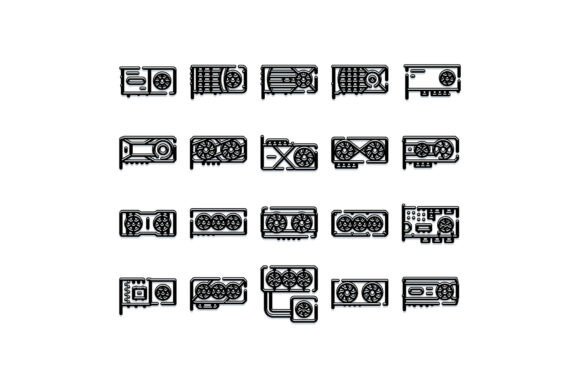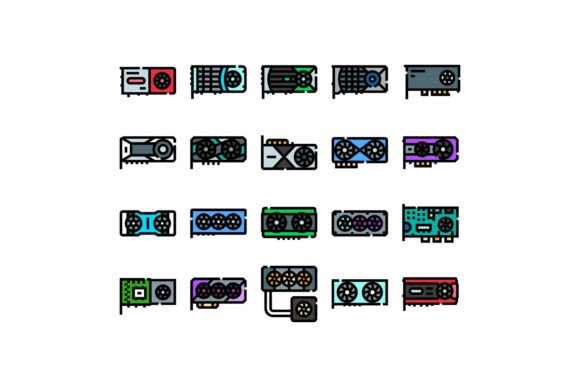
Computer Graphics Processing Units Hardw: The Heart of Visual Computing
Computer Graphics Processing Units Hardw, often referred to as GPUs, are essential components in modern computing systems. These specialized electronic circuits are designed to rapidly manipulate and alter memory to accelerate the creation of images that are output to a display. While they are most commonly associated with gaming and digital media, their applications extend far beyond, influencing fields such as cryptocurrency mining, scientific research, and artificial intelligence.
Understanding the Role of Computer Graphics Processing Units Hardw
At their core, Computer Graphics Processing Units Hardw are responsible for rendering graphics, whether it's a simple 2D interface or complex 3D environments. They work in tandem with the CPU, handling tasks that require parallel processing, which makes them ideal for computationally intensive operations. This division of labor allows for more efficient use of system resources, ensuring that both the CPU and GPU can perform their respective functions without unnecessary strain.
In the context of a broader workflow, Computer Graphics Processing Units Hardw play a crucial role in various stages of project execution. From the initial design phase to final rendering, these units are integral to creating visually compelling content. Whether you're a game developer, a video editor, or a data scientist, understanding how to leverage the power of Computer Graphics Processing Units Hardw can significantly enhance your productivity and results.
Integrating Computer Graphics Processing Units Hardw into Your Workflow
Before diving into any project, it's important to consider the compatibility and requirements of your hardware. When selecting a Computer Graphics Processing Unit, factors such as VRAM (Video Random Access Memory), clock speed, and cooling solutions should be evaluated based on your specific needs. For instance, if you're planning to render high-resolution videos, a GPU with ample VRAM will ensure smooth performance and reduce rendering times.
During the execution of a task, the efficiency of your Computer Graphics Processing Units Hardw can impact the overall workflow. For example, in cryptocurrency mining, a powerful GPU can process transactions faster, leading to higher rewards. Similarly, in gaming, a high-performance GPU can provide smoother frame rates and better visual quality, enhancing the overall experience.
After completing a project, the long-term use of your Computer Graphics Processing Units Hardw should also be considered. Regular maintenance, such as cleaning dust from the heatsink and ensuring proper ventilation, can prolong the lifespan of your GPU and maintain optimal performance. Additionally, keeping your drivers up to date ensures that your GPU is compatible with the latest software and games.
Practical Implementation Tips for Computer Graphics Processing Units Hardw
To get the most out of your Computer Graphics Processing Units Hardw, start by identifying your primary use case. If you're a content creator, look for GPUs that support advanced features like ray tracing and AI acceleration. These features can significantly improve the quality of your work and streamline your editing process.
When integrating Computer Graphics Processing Units Hardw into your existing setup, ensure that your power supply unit (PSU) can handle the additional load. A PSU that is underpowered can lead to system instability or even damage to your components. It's also advisable to check the motherboard's compatibility with your chosen GPU, as some older models may not support the latest graphics cards.
For those involved in cryptocurrency mining, consider using a dedicated mining rig that is optimized for GPU performance. These rigs often feature multiple GPUs connected in a single system, allowing for maximum hash rate and efficiency. However, it's important to monitor temperature and power consumption to avoid overheating and excessive energy costs.
Workflow Examples and Use Cases
One common use case for Computer Graphics Processing Units Hardw is in the field of digital media production. Video editors, for instance, rely on GPUs to accelerate tasks such as color grading, motion graphics, and special effects. By offloading these tasks to the GPU, editors can work with higher resolution footage and apply complex filters without experiencing lag or delays.
Another practical application is in the realm of gaming. Modern games demand significant graphical processing power, and a high-end GPU can make the difference between a smooth, immersive experience and a choppy, frustrating one. Gamers should also consider the importance of driver updates, as these can optimize performance and fix bugs that may affect gameplay.
In the context of business workflows, Computer Graphics Processing Units Hardw can be used for data visualization and analytics. Companies that deal with large datasets can benefit from GPUs that support parallel processing, enabling faster analysis and more accurate insights. This can be particularly useful in industries such as finance, where real-time data processing is critical.
Factors to Consider When Choosing Computer Graphics Processing Units Hardw
When selecting a Computer Graphics Processing Unit, it's essential to evaluate your specific needs and budget. Entry-level GPUs may suffice for basic tasks such as web browsing and office applications, while high-end models are necessary for demanding workloads like 4K video editing or machine learning.
Compatibility is another crucial factor. Ensure that your motherboard has the appropriate PCIe slot and that your power supply can accommodate the GPU's power requirements. Additionally, consider the physical dimensions of the GPU to make sure it fits within your case.
Usability and ease of installation should also be taken into account. Some GPUs come with built-in cooling solutions and user-friendly software that can simplify the setup process. For users who are less familiar with hardware, choosing a GPU with a straightforward installation guide can save time and reduce frustration.
Long-Term Use and Maintenance of Computer Graphics Processing Units Hardw
To ensure the longevity of your Computer Graphics Processing Units Hardw, regular maintenance is essential. Dust accumulation can lead to overheating, so it's important to clean your GPU periodically using compressed air or a soft brush. Proper ventilation in your workspace can also help maintain optimal temperatures and prevent thermal throttling.
Monitoring tools such as GPU-Z or MSI Afterburner can provide valuable insights into your GPU's performance and health. These tools can track metrics like temperature, clock speeds, and power usage, allowing you to identify potential issues before they become serious problems.
Finally, staying informed about the latest developments in GPU technology can help you make informed decisions about upgrades and replacements. As new models are released, they often offer improved performance, efficiency, and features that can enhance your workflow and productivity.